Business Problem
As compliance operations expanded across jurisdictions, disconnected systems and manual processes reduced visibility, increased inefficiencies and compliance risks, requiring a centralized platform.
-
Fragmented Operations and Limited Visibility:
Compliance and operational activities were managed across multiple applications, spreadsheets, and manual processes, resulting in inefficiencies, increased compliance risks, and limited visibility into business operations and filing activities. -
Inconsistent and Scattered Entity Data:
Client and entity information was stored across different systems and communication channels, leading to duplicate records, data inconsistencies, and challenges in maintaining accurate and up-to-date information. -
Non-Standardized Compliance Processes:
Order management and compliance workflows varied across jurisdictions and entity types, increasing manual effort, extending processing times, and raising the risk of filing errors and missed deadlines. -
Inefficient Collaboration with External Partners:
Coordination with registered agents, legal advisors, compliance partners, and internal teams relied heavily on emails and manual follow-ups, causing communication gaps, delays, and limited process transparency. -
Lack of Relationship Mapping and Traceability:
The absence of a structured relationship model between entities, orders, tasks, notices, and stakeholders made activity tracking, reporting, governance, and audit readiness more difficult. -
Need for a Centralized Enterprise Platform:
To overcome these challenges, the organization required a centralized, scalable, and workflow-driven platform to streamline compliance operations, improve data integrity, enhance collaboration, standardize processes, and provide end-to-end operational visibility.
Business Benefits
-
Improved Operational Efficiency – 60%:
Consolidated processes and data into a single platform, replacing manual workflows and improving operational efficiency by 60%, enabling teams to focus on higher-value activities. -
Higher Data Integrity and Better Compliance Posture – 70% Reduction in Data Issues:
Centralized and standardized data reduced duplication by 70%, improved accuracy, minimized inconsistencies, and strengthened overall compliance effectiveness. -
Faster Turnaround and Reduced Risk of Missed Deadlines – 55% Improvement:
Workflow automation accelerated processing by 55%, streamlined task execution, improved accountability, minimized delays, and significantly reduced compliance risks. -
Enhanced Visibility and Control – 65% Improvement in Real-Time Oversight:
Real-time dashboards and integrated task tracking improved management visibility into workloads, deadlines, and progress by approximately 65%, enabling earlier identification of bottlenecks and more informed, data-driven decision-making.
Solution Overview
ConvergeSol has implemented enterprise-grade, centralized compliance and operations platform to manage clients, entities, orders, tasks, and compliance activities in a single system of record. It consolidated client and entity data into a unified, structured model, eliminated duplicate records, and introduced configurable, workflow-driven processes for order management and compliance filings across jurisdictions.
Key features included:
- Centralized Compliance & Operations Platform
- Unified Entity & Client Data Management
- Standardized, Workflow-Driven Processes
- Integrated Task & Workload Management
- Relationship Mapping & End-to-End Traceability
Built using Angular, .NET Core, SQL Server, and cloud-native platform built on Microsoft Azure delivered a scalable, secure, and high-performance architecture. The modular solution ensured seamless integrations, improved regulatory compliance, and supported efficient management of centralized compliance operations, client and entity data, and workflow-driven processes across the organization.
Key features focused on centralization, data governance, process standardization, and compliance efficiency.

Key Features
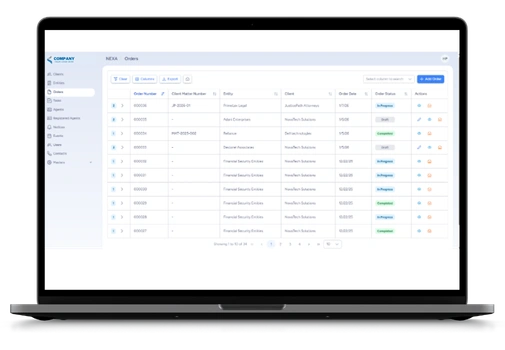
Centralized Compliance and Operations Platform
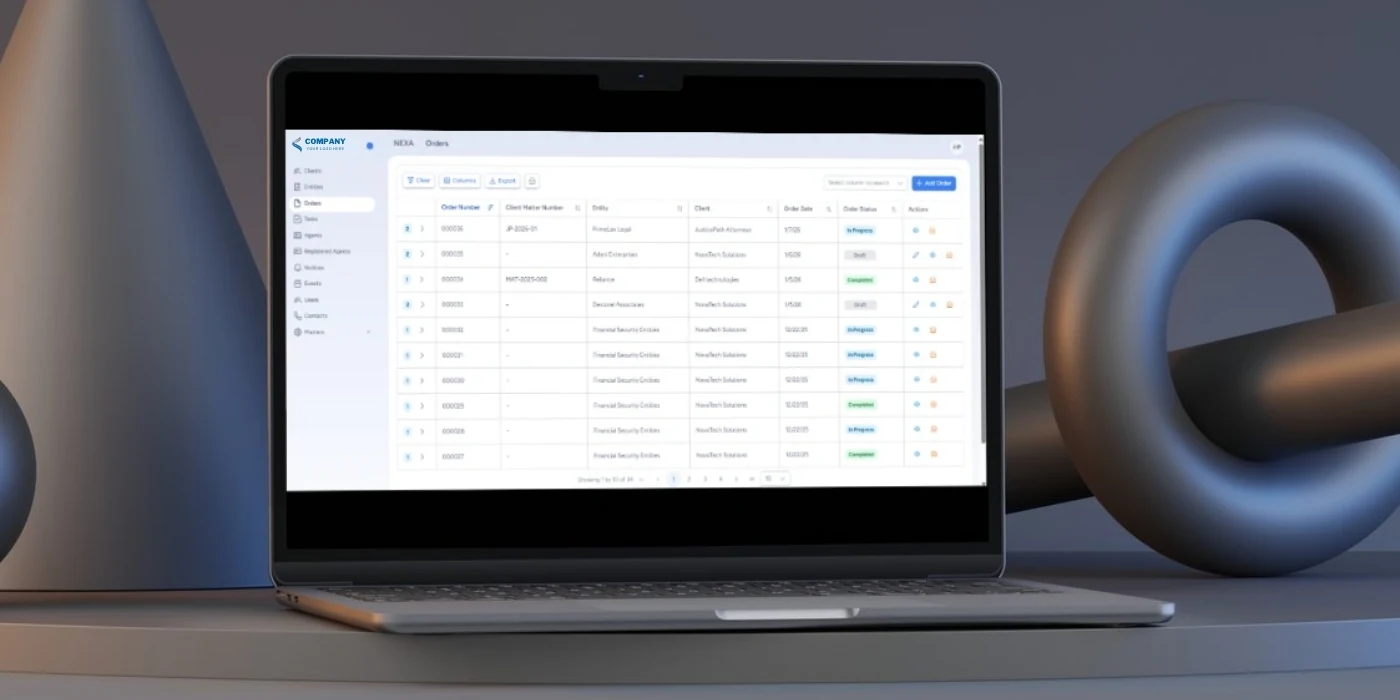
A single, enterprise-grade platform was implemented to manage clients, entities, orders, tasks, and compliance activities in one place. This became the system of record for all compliance and operational data across the organization.
Unified Entity and Client Data Management
The solution consolidated client and entity information into a centralized structured data model. Duplicate records were eliminated, and standardized data fields ensured consistency, making it easier to maintain accurate, up-to-date information.
Standardized, Workflow-Driven Processes
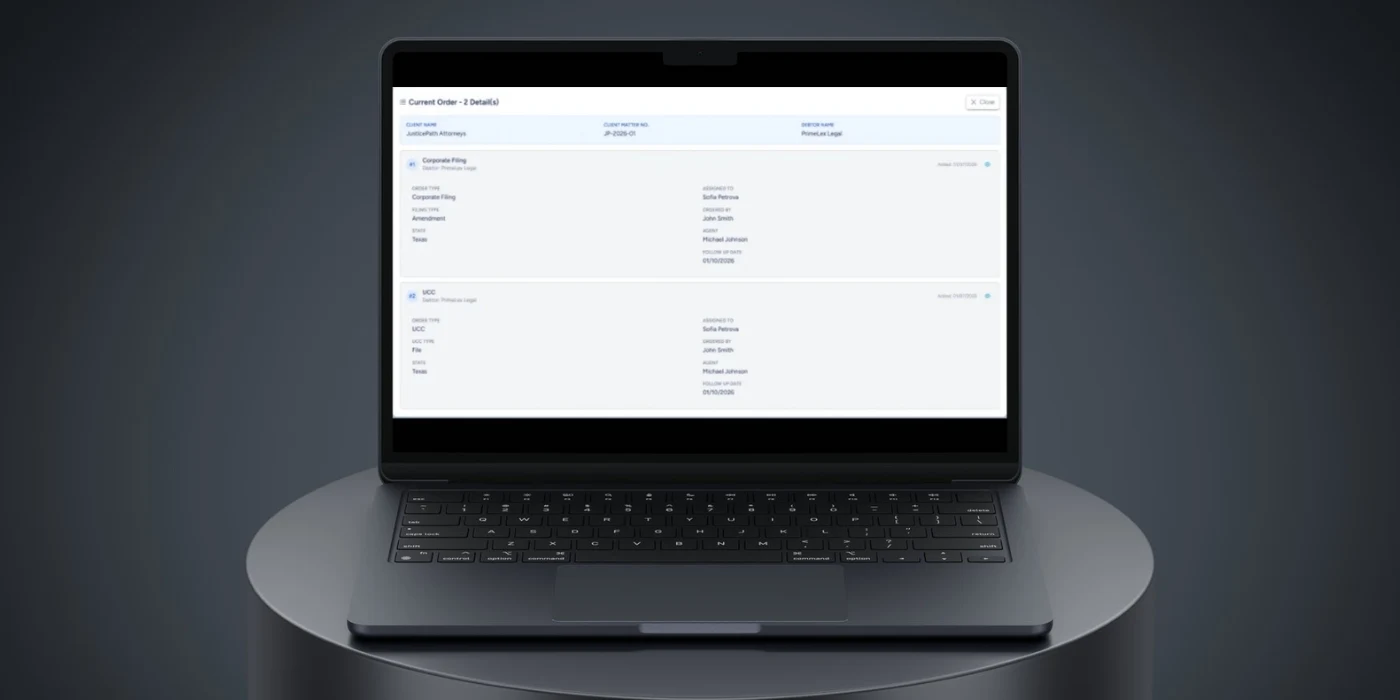
Configurable workflows were introduced for order management and compliance filings across different entity types and jurisdictions. These workflows standardized steps, approvals, and timelines, reducing manual dependencies and ensuring adherence to regulatory deadlines.
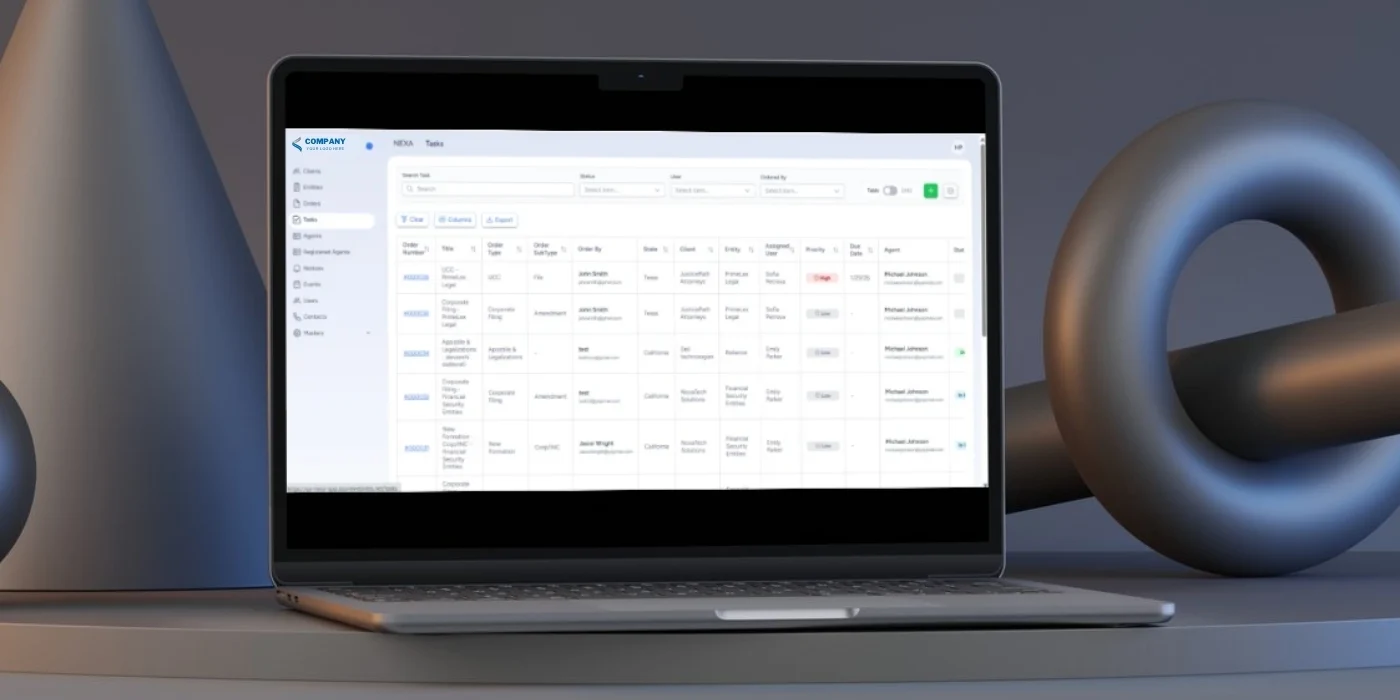
Integrated Task and Workload Management
Built-in task management provided real-time dashboards for workloads, priorities, due dates, and ownership. Teams could track progress across departments, manage deadlines more effectively, and improve accountability from initiation through completion.
Collaboration Hub for Internal and External Stakeholders
The platform enabled structured collaboration with agents, registered agents, external legal advisors, and compliance partners. Responsibilities, SLAs, and handoffs were clearly defined within the system, reducing fragmented communication and improving follow-up discipline.
Relationship Mapping and End-to-End Traceability
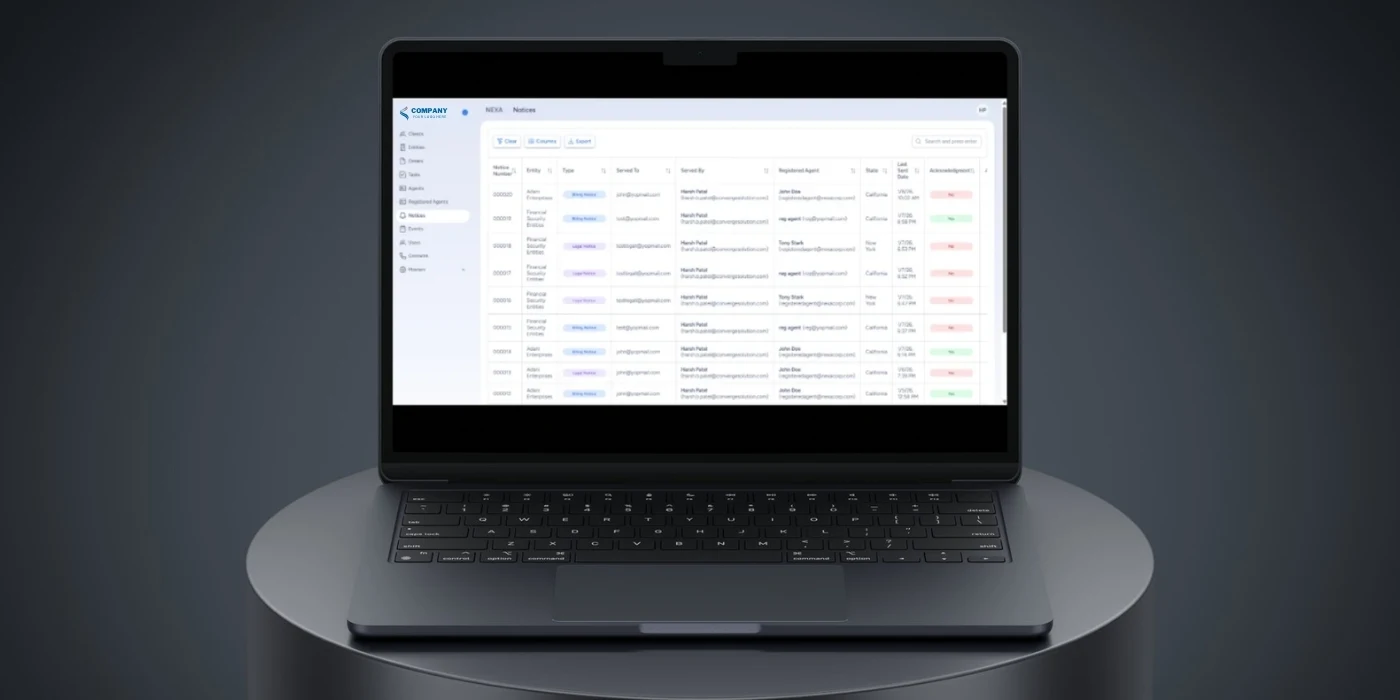
A relationship graph linked clients, entities, orders, tasks, notices, and agents. This end-to-end traceability improved transparency, enabled more accurate reporting, and strengthened governance and audit readiness.
Project Preview
Technology Stack
Technologies that powered this solution to deliver smarter outcomes