How AI Is Transforming Recruitment and Applicant Tracking Systems
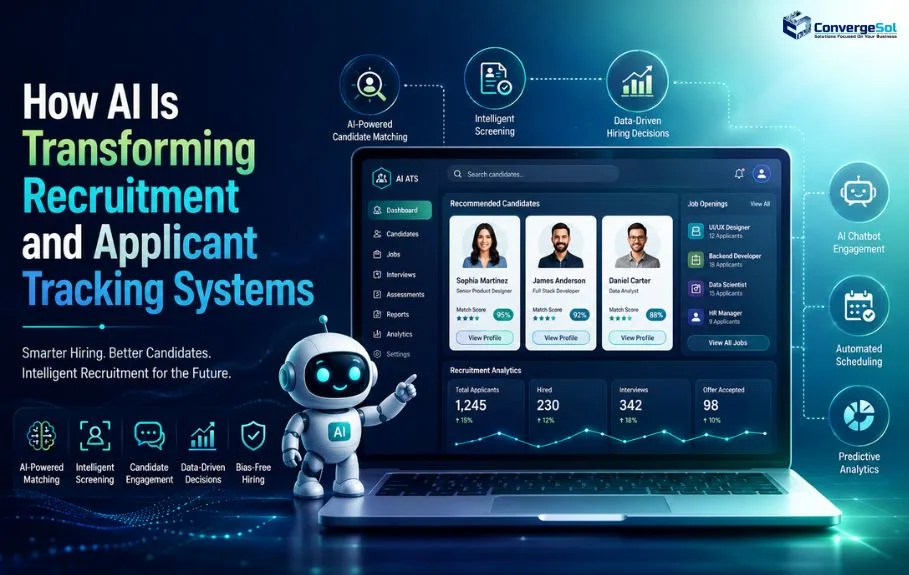
In the spring of 2023, the executive team at a top-tier logistics enterprise grappled with a jammed surge-hiring initiative: despite doubling their recruitment investment, warehouse technician intake stalled. The issue wasn’t a shortage of applicants—over 8,000 resumes poured in—but rather, an HR department conceding defeat against manual screening bottlenecks. In response, the leadership authorized the rapid deployment of an applicant tracking system enhanced with machine learning—a move they hoped would renew the talent pipeline with speed. Within six weeks, screening cycle times plummeted 58%. However, new anxieties over fairness, data governance, and model transparency surfaced immediately, forcing executives to reconcile efficiency gains with hard scrutiny from legal and compliance. These tradeoffs are now boardroom mainstays for most enterprise leadership teams.
Over more than a decade observing large-scale ATS rollouts—from static resume databases to workflow-embedded, algorithm-driven intelligence—the gap between vendor promises and real-world organizational priorities has grown pronounced. The “AI in Modern Recruitment” pitch sounds linear and sanitized; daily executive experience tells a far more intricate, public, and politically charged story.
This article distills the grittiest lessons, candid missteps, and executive-level debates I’ve witnessed as enterprises navigate AI recruitment solutions—grounded in front-line war stories and the unresolved questions that linger after the technical demos end.
Key Takeaways
- AI-powered ATS reduces manual screening—but often shifts, rather than eliminates, human effort.
- Automation introduces governance and compliance concerns, not just efficiency gains.
- AI candidate matching can amplify organizational biases if not monitored consistently.
- Advanced analytics in recruitment can trigger new conflicts about data privacy and authority.
- Adoption success hinges more on stakeholder buy-in than technical prowess.
- Most AI projects face skill shortages and require ongoing tuning, not set-and-forget rollouts.
- Improved candidate experience with AI is possible, but uneven—especially in high-touch roles.
From Manual Tracking to AI-Powered Workflow: Organizational Reality
HR operations across the enterprise landscape often evolve from legacy ATS “databases” serving as digital filing cabinets—centralizing data but offering little in process intelligence. For many executive teams, transitioning to automation seemed to promise an end to never-ending spreadsheets and progress stalls. C-suite sponsors forecasted immediate boosts in recruiter productivity and a reduction in administrative friction.
But practical outcomes can be ambiguous. The deployment of natural language resume parsing or interview coordination bots does reduce repetitive tasks, but redistributes work to areas like AI model oversight, exception handling, and correcting model misjudgments. As a global engineering company’s HR manager remarked, “We saved time, which we immediately spent double-checking the tool’s blind spots.”
A telling example comes from the insurance sector: an AI resume screener inadvertently filtered out early-career applicants whose role titles failed to align with historical job schemas. The fallout was immediate—a charged discussion among Legal, HR, and IT about who should bear accountability for the compliance risk and lost hires. This episode underlined a lesson for executive leaders—automation only works when business ownership, risk, and escalation procedures are all accounted for up front, not just after issues arise.
Enterprises that succeed—often with custom software development tailored to tricky internal requirements—treat ATS deployments as continuous projects, not one-time process fixes. The reality is that successful automation depends on mapping nuanced organizational workarounds, nurturing buy-in, and embedding a cadence of review and recalibration.
AI Candidate Matching: Network Effects—and New Biases
Candidate-matching engines built on deep learning models promise more than just optimized search—they offer to surface high-fit candidates from sprawling talent pools by detecting relationships humans would likely overlook. For organizations with hundreds of concurrent requisitions, this approach is less a luxury, and more an operational lifeline.
Yet, after the initial spike in shortlisting speed or boosted hire quality, governing bias and explainability claims center stage. Consider the case of a global software business whose leadership flagged a noticeable drop in female applicants for senior technical positions three months post-AI launch. While HR celebrated the turbocharged matching, legal compliance triggered a temporary halt until bias audits and retraining improved model transparency—highlighting how amplification of subtle biases can provoke intense regulatory risk.
This emerges as a strategic dilemma: machine-automated matching can replicate and cement legacy preference patterns—particularly when historical hiring data is used as a training baseline. Instead of “fixing” bias, the system can unintentionally entrench it, unless rigorous oversight and frequent audits occur. Drawing parallels from complex SaaS initiatives, executives face a reality that automation scales strengths and weaknesses in equal measure.
For highly regulated verticals—banking, energy, healthcare—the imperative for governance and external auditing rises. Defensible audit trails, cross-functional review panels, and external advisory participation should be executive-level mandates, not optional add-ons. Decision-makers must accept that fairness is a moving target: the system optimizes for probability, not for human values, so governance must compensate.
Recruitment Analytics & Intelligence: Insight, Ownership, and Pushback
Contemporary ATS deployments boast granular analytics, from predicting candidate offer acceptance to tracking attrition risk or recommending outreach timing. While these capabilities can help set new enterprise-wide talent strategies, they also fuel disputes over data ownership, privacy, and the boundaries of authority.
One healthcare client saw analytics pinpoint high “rejection risk” among job offers in their most decorated internal departments. Instead of celebrating analytics for their accuracy, executives faced a credibility crisis: did the data highlight flawed departmental culture or reveal an analytics error? Silo boundaries weakened as leadership confronted the need for cross-departmental data transparency—and reputational pride often stood in the way before consensus emerged.
For top leadership, a critical issue is determining who will act on analytic insights. HR may see analytics as a recruiting lever, but often findings demand C-level intervention—particularly if highlighted vulnerabilities intersect with compliance or strategic talent mandates. Globally, emerging regulations—like the EU’s AI Act or Colorado’s consumer data protections—force executive teams to consider both operationalization and the long tail of compliance. Organizations must invest in robust data infrastructure that’s as agile as their compliance environment is unpredictable.
The effects extend beyond internal pushback. New York City’s Local Law 144, active from December 2023, has created a playbook for mandatory AI auditability, documentation, and transparency demands in talent systems. Enterprises without automated compliance checks or clear accountability structures risk regulatory intervention and significant reputational fallout.
Automation and the Candidate Experience: Gains and Gaps
Technology vendors tout algorithms as friction-removers in the candidate journey—think chatbots for instant updates, automated scheduling, and streamlined FAQ responses—releasing recruiters from routine queries. In high-volume retail and operational environments, these efficiencies translate into dramatic cycle time reductions, as seen when a national chain slashed inquiry response from days to hours via automated engagement.
Commercial reality is rarely uniform. In high-stakes searches for executive or highly specialized roles, even subtle automation missteps—like sending formulaic rejections or impersonal updates—can undermine the employer brand. At one international legal firm, a high-value lateral candidate nearly withdrew entirely after a poorly executed automated notification. Senior leaders were forced to intervene swiftly, then adjusted their automation policy to apply only to lower-sensitivity roles.
Executive leaders should note: a “one-size-fits-all” approach can backfire, especially where relationships or candidate perception drive competitive advantage. Instead, use data and feedback to map which cohorts and stages warrant automation versus human touch. Treating automation as a continuous dial, not an on-off switch, leads to better long-term returns and preserves brand equity. Enterprises with complex platform management needs must empower recruiters and business lines to repeatedly recalibrate this balance based on experience and market feedback.
Implementation Challenges: Skills, Budget, and Buy-in
Every major ATS automation project I’ve evaluated—and especially those serving thousands of monthly applicants—encounters a predictable trio of executive-level complexities:
- Skills Gaps: Organizations rarely have sufficient in-house AI configuration and model management talent at project outset. Upskilling is imperative. This investment is ongoing: a recent SHRM report shows nearly 70% of enterprises blame expertise shortfalls for stalling recruitment automation. Savvy leaders pre-negotiate external partnerships for specialized solution delivery and build long-term learning programs.
- Budget Fluidity: Initial licensing or cloud contracts obscure the full economic impact. In practice, budget overruns stem from bias mitigation, model retraining, required compliance upgrades, and managing “tail risk” on edge cases. One insurer tracked 18% annual ATS overruns directly to regulatory audit cycles, catching even seasoned CFOs off-guard.
- Stakeholder Alignment: Competing priorities—HR seeks efficiency; Legal scrutinizes fairness; IT manages integration; and executive appetite fluctuates with each compliance headline. A case from a Fortune 500 manufacturer illustrates the real stakes: three iterations of the steering committee, driven by D&I imperatives and operational urgency, before landing on an acceptable balance of risk, speed, and inclusion.
Executive sponsors must expose and resolve these rubs at program inception—not after technical milestones are missed or reputational risks materialize. When considering cloud-driven modernization for recruiting, it’s imperative to bring risk, finance, and business lines into the process, define escalations, and ensure ongoing review and benchmarking—moving the project from isolated IT upgrade to board-level program.
Technology Behind AI-Powered Recruitment
Building an AI-powered recruitment platform requires a scalable technology foundation. .NET can support backend services, APIs, workflows, and integrations, while Angular can power responsive dashboards and interfaces for recruiters and hiring managers.
AI services can then be integrated to support capabilities such as candidate matching, resume analysis, automation, and recruitment analytics.
For organizations with unique recruitment workflows, Custom Software Development can provide the flexibility to build these capabilities around specific business requirements.
See a real-world implementation: Explore our AI-Powered Recruitment & Applicant Tracking Platform case study to see how AI, automation, and recruitment workflows can be combined into a scalable hiring solution.
- Budget: Evaluate and approve ongoing investment—contingency funds for retraining and legal reviews are as crucial as initial licenses.
- Compliance: Prioritize pre-launch bias audits, mandate explainability, and benchmark against frameworks like NYC’s Local Law 144 or the EU AI Act.
- Risk: Clearly assign accountability for errors, bias incidents, or regulatory breaches inside SLAs and vendor contracts. Don’t wait for an incident to define blame.
- Decision Matrix: Match automation level to candidate volume and criticality; high-impact or regulated roles demand human review, while scalable automation fits for repetitive tasks.
- Next Steps: Charter a cross-functional steering group, require recurring performance and compliance reviews, and codify improvement KPIs—ensuring recruitment AI is managed as a living, evolving program.
Responsible AI and Compliance in Recruitment
Compliance leadership in AI-driven recruitment has become non-negotiable. With regulatory regimes such as New York’s AEDT Law and the EU’s AI Act on the horizon, the boardroom responsibility now includes traceability, documented explainability, and proven bias monitoring at every deployment stage. Scrutiny doesn’t just come from compliance departments but also employee groups, public advocacy, and increasingly from reputational risk committees.
Many enterprises now delay ATS launches while legal and risk officers independently scrutinize documentation, execute their own sandbox audits, and demand real proof of model retraining procedures. Several deployments in the past year faced full suspension until third-party bias audits were completed—a deliberate, preventive stance as much about preserving employer brand as about regulatory fines.
For implementation teams, the imperative is clear: architect every rollout around international standards such as the NIST AI Risk Management Framework, supplementing with controls from OWASP. Build compliance monitoring into operational cadence, not as a point-in-time task.
Lessons Observed Across Industries and Organizations
Executive decision-making in AI recruitment is profoundly shaped by industry context. Technology and finance leaders possess both budgets and regulatory leeway to iterate rapidly; healthcare, government, and heavily regulated fields adopt a more measured approach, burdened by strict data localization and elevated privacy risk for any misstep.
A notable cautionary tale: a multinational financial power deployed Salesforce-driven recruitment automation seeking both efficiency and transparency. But banking regulators intervened, citing insufficient audit logs and opaque scoring models. The company endured project delays, significant extra spend, and only succeeded by overhauling explainability features and mandating human-in-the-loop signoffs. The reward? They became the reference case for passing new central bank AI audit protocols—transforming recruitment from liability to compliance showpiece.
Sector dynamics matter deeply. For example, challenger banks drive rapid compliance-centric ATS innovation in financial services, while union negotiations and HIPAA requirements often mean explainability and human review take precedence in healthcare recruitment. Executives benchmarking impact can consult our financial sector insights for specific case-driven lessons.
Frequently Asked Questions
How does AI improve candidate screening in applicant tracking systems?
AI recruitment platforms automate resume parsing, surface best-fit applicants, and accelerate shortlisting with predictive analytics. However, human oversight is still needed—especially to review edge-case candidates, fine-tune models, and address algorithmic misclassifications. In other words, the shape of the work changes, but it rarely entirely disappears.
What are the main implementation challenges with AI-powered ATS?
Top obstacles include upskilling for AI configuration, budgeting for continuous compliance and maintenance, and building consensus between business, legal, and technical stakeholders. The bulk of project pain often emerges after initial deployment, during the first cycle of audits, upgrades, or stakeholder reviews.
How do organizations address bias in AI candidate matching?
Effective firms assemble mixed teams—including HR, compliance, IT, and diversity consultants—to conduct recurring algorithm audits, update training data, and explore explainability options. Bias mitigation isn’t a one-off; it’s a quarterly discipline tied to audit schedules and evolving hiring goals.
Can AI fully replace human interaction in recruitment?
While AI can handle high-volume, routine screening, specialist and executive-level placements still demand human intuition, judgment, and interpersonal nuance. Even in automated workflows, critical decisions almost always get a human review—ensuring empathy and context where it matters most.
What compliance frameworks guide responsible use of AI in recruitment?
Organizations increasingly look to actionable guidelines such as the NIST AI Risk Management Framework and OWASP Top Ten AI guidelines. New York City’s AEDT Law and the EU’s evolving frameworks are bringing enforcement teeth to what were once “best practices.”
For executive-level support in evaluating AI-powered recruitment technology decisions, or for candid implementation diagnostics, connect with ConvergeSol.
Conclusion
AI-driven ATS adoption is fundamentally shifting recruitment—through deliberate, executive-driven priorities rather than passive deployment. Sustained value comes from an ongoing commitment to evidence-led tradeoffs: selecting automation targets with care, enforcing robust model governance, and strictly mapping compliance requirements to evolving technology. Leaders who strategically assign ownership, define KPIs—including candidate conversion, bias reduction, and user satisfaction—and schedule periodic post-mortems, ensure their organizations adapt, learn, and avoid repeating errors.
Executives play a central role by establishing cross-functional steering committees, embedding quarterly technology and compliance reviews, and consistently evaluating the real business impacts—positive and negative—on brand, efficiency, and risk posture. When a new audit requirement or failed automation outcome occurs, progressive organizations frame these incidents as iterative learning moments, not setbacks. Transparency around tradeoffs and mistakes accelerates capability growth, protecting reputation and driving smarter investment.
As regulatory complexity and oversight intensify—with new auditing protocols and legal precedents such as NYC’s AEDT Law—executive teams must anchor AI recruitment strategy with ongoing transparency, adaptability, and accountability at every stage. Prioritizing a learning-driven, metrics-focused approach not only mitigates risk but positions the enterprise as a trusted employer in an era when public trust and legal compliance are inseparable from technological advancement.
For deeper dives into successful enterprise rollouts and tackling integration at scale, explore our perspective on why systems break at scale. Leadership grounded in evidence and agility outlasts hype—especially in building a resilient, future-ready recruitment practice.
Write your comment
Recent Blogs