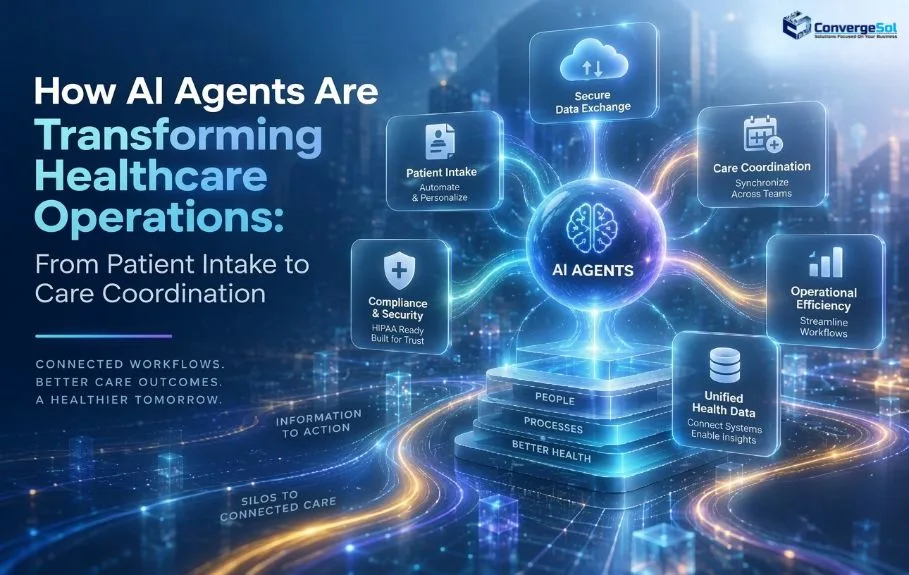
How AI Agents Are Transforming Healthcare Operations: From Patient Intake to Care Coordination
When I first witnessed a hospital operations team debate whether to experiment with an AI agent for patient intake, you could feel the tension in the room. The registration manager was concerned that patients might be confused. The IT lead groaned about connecting the new system to the EHR. Over in the corner, the compliance officer—arms folded—wanted answers on HIPAA and audit trails. And, as always, the CFO just wanted to know if it would actually cut down on overtime for the night shift.
This is what moving toward AI-powered healthcare really feels like. There’s excitement, doubt, and a million practical questions all swirling at once. These AI agents aren’t just chatbots, but they’re not doctors, either—they’re popping up in places where staff used to spend hours chasing paperwork, calling patients, and following up. The technology isn’t usually the hardest part. What trips people up is working these new tools into the daily chaos of real hospital life.
So, what really happens when a hospital tries to hand over patient intake, appointments, or care coordination to an AI agent? The biggest lessons aren’t about cool algorithms—they’re about the people, the workflow, and all the unexpected friction no one saw coming.
Key Takeaways
- AI agents automate repetitive healthcare tasks but require careful integration with EHR and billing systems.
- Patient intake, appointment scheduling, and eligibility checks are early wins, but edge cases often trip up automation.
- Human-in-the-loop oversight is essential for clinical and sensitive workflows to avoid errors and maintain trust.
- Data privacy, HIPAA compliance, and auditability are top concerns—often slowing down or reshaping deployments.
- AI agents can reduce administrative workload, but only if workflows, staff roles, and escalation paths are clearly defined.
- Organizations underestimate the challenge of monitoring, evaluating, and retraining AI agents in production.
- Success depends as much on stakeholder buy-in and change management as on technical capability.
What AI Agents Really Are—And What They’re Not
Teams often begin by confusing AI agents with the chatbots of five years ago. The distinction matters. AI agents are designed to act with some autonomy: they can collect information, trigger workflows, and even coordinate with other systems or agents. Unlike rule-based bots, they can handle open-ended requests, ask clarifying questions, and adapt to new scenarios—at least in theory.
But the reality is, most healthcare deployments start with narrow, well-defined tasks. Patient intake, insurance verification, and appointment reminders are common entry points. The moment an agent is asked to interpret ambiguous symptoms or handle exceptions—say, a patient who can’t remember their insurance provider—things get tricky. What usually breaks first is not the AI model, but the escalation path: who steps in, and how, when the agent gets stuck?
For a deeper look at how AI agents differ from traditional automation, see Angular Without Zone.js: What Actually Changes?—the parallels in workflow orchestration are surprisingly relevant.
Automating Patient Intake and Registration: Lessons from the Front Line
The promise is simple: let an AI agent collect demographic information, insurance details, and medical history before the patient even walks in. In practice, teams discover that integration with existing EHR and scheduling systems is rarely plug-and-play. Data formats differ, and mapping fields between the agent’s output and the hospital’s intake forms often requires custom software development.
One hospital I observed tried to automate insurance eligibility checks. The agent worked well until it hit an out-of-state Medicaid plan, which required a different API and manual review. The result? Staff still needed to monitor the queue, and the expected time savings were cut in half.
The tradeoff is clear: automation speeds up the routine cases, but edge cases demand robust fallback processes. Without clear escalation, patients can fall through the cracks—or worse, show up for appointments only to be turned away at the front desk.
For organizations considering this path, Data Solutions expertise is often critical for mapping, cleansing, and integrating data flows between AI agents and legacy systems.
Appointment Scheduling, Reminders, and the Reality of Patient Communication
AI agents excel at sending appointment reminders, rescheduling slots, and even handling basic patient queries via chat or voice. But the hard part is rarely the outbound message—it’s the inbound response. Patients reply with typos, ambiguous requests, or questions the agent isn’t trained to handle.
One clinic’s AI-powered scheduling agent was derailed when patients started texting, "My ride is late; can I come in 20 min late?” The agent, expecting only “yes” or “no” responses, failed to escalate these messages, resulting in missed appointments and frustrated staff.
The lesson: patient communication is messy. AI agents need clear boundaries and escalation rules, and staff need training on when to intervene. The most successful teams treat the agent as a first-pass filter, not a replacement for human judgment.
For more on managing complex workflows, see our AI-Powered Recruitment and Applicant Tracking Platform case study, where similar communication challenges emerged in a different domain.
Care Coordination: Where AI Agents Add Value—and Where They Don’t
Coordinating care across doctors, nurses, and specialists is a notorious bottleneck. AI agents can help by routing messages, flagging urgent lab results, or reminding staff of follow-up tasks. But the moment clinical nuance enters the picture—say, interpreting a borderline lab value or triaging a complex case—the agent’s limitations become obvious.
What usually goes wrong is overconfidence in the agent’s ability to “understand” context. One health system tried using an AI agent to route consult requests. It worked for routine referrals, but missed subtle cues in free-text notes, leading to delays in critical cases. After a near-miss, the team added mandatory human review for all non-standard referrals.
The tradeoff: automation can reduce administrative friction, but only if clinical oversight is built in. Human-in-the-loop workflows are not a nice-to-have—they’re essential for safety and trust.
For organizations aiming to orchestrate multi-agent workflows, AI Solutions and Application Management Solutions expertise are often needed to design escalation logic, monitoring, and audit trails.
Integration with EHR, Billing, and Healthcare APIs: The Unseen Work
The technical integration is where most projects slow down. EHR vendors expose APIs, but documentation is sparse and versioning is inconsistent. Billing systems may require batch uploads, while appointment platforms expect real-time updates. Every interface adds a potential point of failure.
Teams often underestimate the time required for compliance reviews, security assessments, and governance approvals. HIPAA, auditability, and patient consent are not just checkboxes—they shape how data flows, who can access what, and how exceptions are handled.
The most successful implementations start with a narrow scope, build robust logging and monitoring from day one, and plan for regular audits. For reference, see official HIPAA security guidance from the U.S. Department of Health & Human Services.
For healthcare organizations, aligning with industry-specific healthcare solutions is often the difference between a stalled pilot and a scalable deployment.
Monitoring, Auditing, and Evaluating AI Agent Performance
Deploying an AI agent is not a “set it and forget it” exercise. Teams quickly discover that agents drift—models degrade, data changes, and patient expectations evolve. What worked in the pilot may fail in production as new edge cases emerge.
The hard part is building feedback loops: logging every interaction, flagging failures, and retraining models based on real-world data. Many organizations lack the skills or resources for ongoing monitoring and evaluation. As a result, agents may quietly accumulate errors or reinforce biases until a major incident triggers a review.
Best practice is to treat agent monitoring as a core operational responsibility, not an afterthought. For technical guidance, the Microsoft Azure AI monitoring documentation offers practical frameworks.
End-to-End Example: The Patient Journey with AI Agents
Consider a typical patient journey at a mid-sized clinic:
- The patient receives a text from an AI agent to pre-register and upload insurance information.
- The agent verifies eligibility, flags missing data, and schedules an appointment slot.
- On arrival, a kiosk agent confirms identity and updates the EHR in real time.
- During the visit, a clinical documentation agent assists the nurse in capturing medical history.
- After discharge, the agent sends follow-up instructions and schedules a telehealth check-in.
At each step, the agent handles routine cases—but staff intervene for exceptions, ambiguous responses, or clinical decisions. The real value comes from freeing up human time for complex, high-touch care, not from eliminating staff altogether.
Implementation Roadmap and Best Practices
From what I’ve seen, successful AI agent deployments in healthcare follow a few hard-won lessons:
- Start with a single, high-volume workflow (like intake or reminders) and expand gradually.
- Map out escalation paths for every edge case—don’t assume the agent can handle ambiguity.
- Invest in data integration and cleansing up front; messy data will break even the best agent.
- Build monitoring, logging, and auditability from day one.
- Engage compliance, IT, and clinical leaders early—governance delays are inevitable.
- Plan for ongoing retraining and evaluation; static agents quickly become obsolete.
For a checklist of production readiness, see Application Management Solutions and Data Solutions—both are critical for sustainable, compliant operations.
Frequently Asked Questions
How do AI agents differ from traditional chatbots in healthcare?
AI agents can handle open-ended requests, adapt to new scenarios, and trigger workflows across systems, while traditional chatbots are typically rule-based and limited to scripted interactions. In practice, AI agents require more robust integration and oversight.
What are the main risks of using AI agents for patient intake?
Risks include inaccurate data capture, missed edge cases, integration failures, and compliance issues. Without clear escalation paths and human oversight, patients may experience delays or errors in their care journey.
How can healthcare organizations ensure HIPAA compliance with AI agents?
Organizations must ensure all data flows are encrypted, access is controlled, and audit trails are maintained. Regular compliance reviews and alignment with official HIPAA security guidance are essential.
What is a human-in-the-loop workflow, and why is it important?
A human-in-the-loop workflow ensures that staff review or intervene in cases where the AI agent encounters ambiguity, clinical decisions, or exceptions. This maintains safety, trust, and compliance.
How should organizations monitor and evaluate AI agent performance?
Continuous monitoring, logging, and feedback loops are essential. Teams should track agent errors, escalate failures, and retrain models regularly to adapt to changing workflows and data.
Conclusion
The real story of AI agents in healthcare isn’t about replacing staff or automating everything. It’s about finding the right balance—using agents to handle routine, repetitive tasks so that skilled professionals can focus on what matters most: patient care. The journey is rarely smooth. Integration headaches, compliance reviews, and the unpredictability of human communication all shape the outcome. But for organizations willing to invest in thoughtful design, robust monitoring, and ongoing adaptation, the payoff is real: less administrative burden, faster patient processing, and more time for meaningful clinical work.
If you’re weighing the next step in automating healthcare operations, or want to see how AI agents could fit into your workflows, let’s talk through your specific challenges and goals.
Based in the US and evaluating a development partner? Book a 15-minute call to explore practical options for AI-powered healthcare operations.
Write your comment
Recent Blogs